Category Archives: Television

at home, thousands of miles away from home

I was in most of the scenes we shot yesterday, including a scene where I talked for almost three pages.

Three. Pages. Of. Dialog.

It was a lot, and we were filming right next to an airport so there were constant interruptions from airplanes, so I messed up more than I would have liked … but the cast and crew were really awesome and understanding, and we got through it.

Actually, we didn’t just “get through it.” We did some really great work together. You see, I break down my scenes into actions, intentions, goals, and a few other specific things. Just like in real life, I may want to Let Them Know I’m The Boss, or Put Them At Ease, or Make A Generous Offer. I may need to do all of those things in the span of a few lines, because my primary goal that ties all of that together is To Get Them To Go Along With Something I Can’t Live Without.

Being able to take all of that work and put it into a scene, but then also throw all the preparation away and keep it simple and in the moment is a challenge on in the best of circumstances (it’s easy to get wrapped up in the process, to go into my head and lose my connection to the character and the scene — this is what an actor like me goes to school for years to learn how to overcome) but when there are airplanes a few hundred feet away ever two minutes, it’s even more challenging than usual. It would be very, very easy to be so distracted by the noise and so concerned with just getting through the scene, that I could lose all the levels and character choices … but the director and the cast made sure that didn’t happen, by reassuring me that the performance was layered and communicated all the things I wanted to communicate. (I usually have a good sense of what I’m doing, but there was so much to think about, so much information to convey, and so much noise distracting me, I wasn’t able to know if I was on point or not — and this is where  a good, engaged director and cast is the difference between a performance that is meaningful to the audience and a performance that doesn’t quite hit the mark).

So it was a very long day, and a very challenging one, but I’m proud of what we did and happy with the work.

I’ll be honest: I keep thinking that I’m done being an on-camera actor, but then I have an experience like the one I had yesterday, and I remember how much fun, and how artistically satisfying it is, to take the words off the page and bring them to life with some other people.

I’m in a lot of stuff, again, today. I get to work with an actor who I instantly liked tomorrow, and I’m really looking forward to seeing what we discover together in our scenes.

It turns out that there’s a lot happening today.

First up, this is happening:

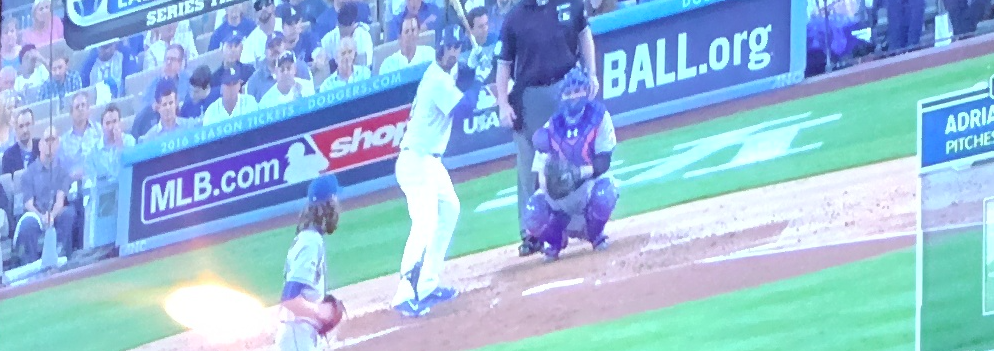
Wil Wheaton Big Bang Theory Season 8

We also have a new episode of Tabletop out today, and it’s one of my favorites of the season.

And after waiting almost a year to be able to talk about it, Nintendo of America has announced that I play the voice of Abraham Lincoln in their insanely awesome 3DS title, Code Name STEAM.

I am extremely proud of this game, and I can’t wait to play it. It’s got a great balance of humor and strategy, and there may be some awesomely weird stuff in it, too … you can confirm it for yourself with the trailer:

Peak Zombie

This is my intro for Dead of Winter. I thought it may spark an interesting discussion about what I call Peak Zombie:

I think I was a freshman or sophomore in high school the first time I saw Dawn of the Dead. It hit me the way certain things can only hit a child’s fragile, eggshell mind: it was gory, and disturbing, and pretty scary. It also made me wonder what I would do if I found myself in the zombie apocalypse. Would it really be living if I spent the rest of my life trapped inside a mall? At what point does surviving cease to be living? Why am I asking myself incredibly complex and difficult philosophical questions, instead of playing The Legend of Zelda?

Dawn of the Dead piqued my interest in George A. Romero’s version of the zombie apocalypse, and I devoured — sorry — Night of the Living Dead, Day of the Dead, and even Return of the Living Dead. For many years, I was a zombie fiend. In fact, every Halloween from 16 to 30, I was some version of a zombie. I wrote stories about zombies, I read stories about zombies, and if there was something with a zombie in it, it was on my wish list.

But sometime in the last few years, we hit Peak Zombie, and the truth is: I’m kind of over it. The Living Dead are rarely a metaphor for consumerism, conformity, militarization, and complacency. In much of popular culture, zombies are little more than cannon fodder and background noise in corporate entertainment that’s rushed to cash in on the public’s insatiable — some may say zombie-like — hunger for stories that pit a scrappy band of human survivors against a relentless, endless, faceless mob of interchangeable, shambling bad guys.

But every now and then, something breaks through the fortified wall of hardened, Hipster cynicism I’ve built around my survival compound, and reminds me that we keep returning to stories where zombies are threatening our very existence because even if the undead aren’t explicitly standing in for some profound and specific commentary on our modern world, they can, in fact, stand in for time, age, hunger, despair, and every existential threat we worry about when the night is darkest, and we can’t find the light.

Today on Tabletop, Dodger Leigh, Grant Imahara, and Ashley Johnson are here to explore a game that puts us right in the middle of the depths of our fears, during the worst of  the zombie apocalypse. As if staying alive and pushing back the undead wasn’t hard enough, one of us may very well be working against the rest of us, to ensure that none of us make it through the DEAD OF WINTER.